Famous Architects in Chicago and the Buildings They’re Known For
The Architects Who Helped Shape Chicago’s Skyline and the Buildings That Made Them Famous
Chicago’s skyline is one of the most recognizable in the world, and much of that comes down to the architects who helped shape the city over the last 150 years. From early skyscraper pioneers to modern designers pushing engineering limits, Chicago became a testing ground for new architectural ideas after the Great Chicago Fire of 1871.
Today, the city is known for everything from historic limestone towers to glass skyscrapers along the river. Many of these buildings are tied directly to architects whose work influenced cities far beyond Chicago itself.
If you’re researching famous architects in Chicago or want to better understand the people behind the skyline, these are some of the most important names to know.
Daniel Burnham
Daniel Burnham is one of the most influential figures in Chicago architecture and urban planning. He played a major role in rebuilding and reshaping the city after the Great Chicago Fire.
Burnham is best known for co-designing the Flatiron Building in New York, but in Chicago his impact is everywhere. He worked on major projects including the Rookery Building, the Railway Exchange Building, and Union Station. He also helped create the 1909 Plan of Chicago, which influenced the city’s street layout, parks, and lakefront development.
One of his most quoted lines, “Make no little plans,” became closely associated with Chicago’s rapid growth during the late 19th and early 20th centuries.
Louis Sullivan
Louis Sullivan is often called the “father of skyscrapers” because of his influence on early tall-building design.
At a time when skyscrapers were still a new concept, Sullivan focused on making tall buildings look vertical rather than simply stacking floors on top of each other. His work helped define the visual style of early American skyscrapers.
Some of his best-known Chicago buildings include the Auditorium Building and the Carson Pirie Scott Building. The Carson building, in particular, became famous for its ornate cast-iron entrance and large display windows.
Sullivan also mentored Frank Lloyd Wright early in Wright’s career, making his influence even broader.
For anyone exploring famous Chicago architects, Sullivan is one of the essential names.
Frank Lloyd Wright
Although Frank Lloyd Wright is strongly associated with suburban Oak Park, his influence on Chicago architecture remains significant.
Wright became known for his Prairie School style, which emphasized horizontal lines, open interiors, and designs that blended more naturally with the surrounding environment.
One of his best-known local projects is the Robie House in Hyde Park, which is now considered one of the most important examples of Prairie-style architecture in the world.
While many architects at the time focused on dense urban buildings, Wright pushed residential architecture in a completely different direction.
His work later influenced modern residential design across the United States.
Mies van der Rohe
Ludwig Mies van der Rohe helped define Chicago’s modern skyline after immigrating from Germany.
Known for his minimalist approach, Mies focused heavily on clean lines, glass facades, and exposed structural elements. His philosophy of “less is more” became one of the defining ideas of modern architecture.
Some of his best-known Chicago projects include the Federal Center and the towers at 860–880 Lake Shore Drive.
His influence can still be seen throughout downtown Chicago today. Many modern office towers borrow heavily from the style he helped popularize during the mid-20th century.
Mies also served as the head of the architecture school at IIT (Illinois Institute of Technology), where he influenced generations of architects.
Jeanne Gang
Jeanne Gang represents a more modern generation of Chicago architects.
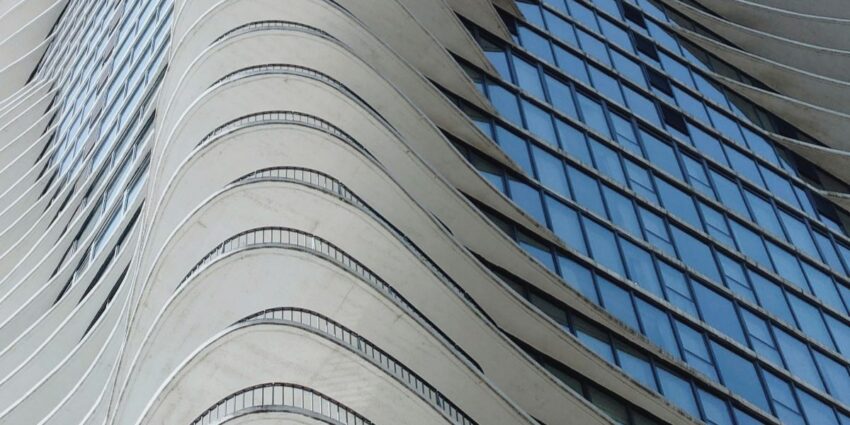
Founder of Studio Gang, she became internationally recognized for designing Aqua Tower, one of the city’s most visually distinctive skyscrapers. The building stands out because of its curved balconies, which create a wave-like appearance across the exterior.
The design wasn’t just aesthetic. The balcony shapes were also intended to improve shade and reduce wind impact.
Gang has continued to work on large-scale projects both in Chicago and internationally, becoming one of the most recognized contemporary architects connected to the city.
Her work reflects how Chicago continues evolving architecturally rather than simply preserving older styles.
Helmut Jahn
Helmut Jahn became known for bold, high-tech modern buildings that helped reshape parts of downtown Chicago during the late 20th century.
One of his best-known projects is the James R. Thompson Center, recognized for its large curved glass facade and massive interior atrium.
He also designed 875 North Michigan Avenue, formerly known as the John Hancock Center, along with multiple international projects.
Jahn’s buildings often emphasized transparency, steel framing, and large open spaces.
While some of his work has divided public opinion over the years, his influence on Chicago’s modern architectural identity is undeniable.
Skidmore, Owings & Merrill (SOM)
Not all major Chicago architecture is tied to a single individual. Skidmore, Owings & Merrill, better known as SOM, became one of the most important architecture firms in the city’s history.
The firm was involved in designing some of Chicago’s most recognizable skyscrapers, including Willis Tower (formerly Sears Tower) and the iconic John Hancock Center.
Engineer Fazlur Rahman Khan, who worked at SOM, helped revolutionize skyscraper engineering through the use of tubular structural systems. Those engineering methods allowed buildings to reach heights that previously weren’t practical.
Without SOM’s influence, Chicago’s skyline would likely look very different today.
Why Chicago Became an Architecture Capital
Chicago’s architectural importance comes partly from circumstance.
After the Great Chicago Fire destroyed much of the city in 1871, architects had an unusual opportunity to rebuild large sections of an expanding urban center. Around the same time, advances in steel construction and elevator technology made taller buildings possible.
Chicago quickly became a place where architects experimented with new ideas.
That culture continued throughout the 20th century, attracting architects from around the world and turning the city into a global reference point for architecture and engineering.
See Chicago Architecture from the River
Before getting into individual architects, it’s worth mentioning that many of Chicago’s best-known buildings were designed specifically to be viewed from the river.
The river cuts through the center of downtown and gives a clearer perspective on how the city developed over time. Different architectural styles sit side-by-side, from early steel-frame buildings to modern glass towers.
If you’re visiting the city, one of the easiest ways to understand Chicago architecture is by taking a river cruise. You can check out the 90-minute architecture boat tour here. The tour covers major landmarks throughout downtown while explaining the architects, engineering, and history behind them.
Years in the Making
Today, visitors come specifically to see buildings designed by many of the architects listed above.
Chicago’s skyline didn’t happen by accident. It was shaped over decades by architects experimenting with new materials, engineering techniques, and design philosophies.
That’s part of why architecture remains one of the city’s biggest attractions today.